
October 7, 2026
Written and recorded by Gallery & Curatorial Fellow Hadley Stockwell
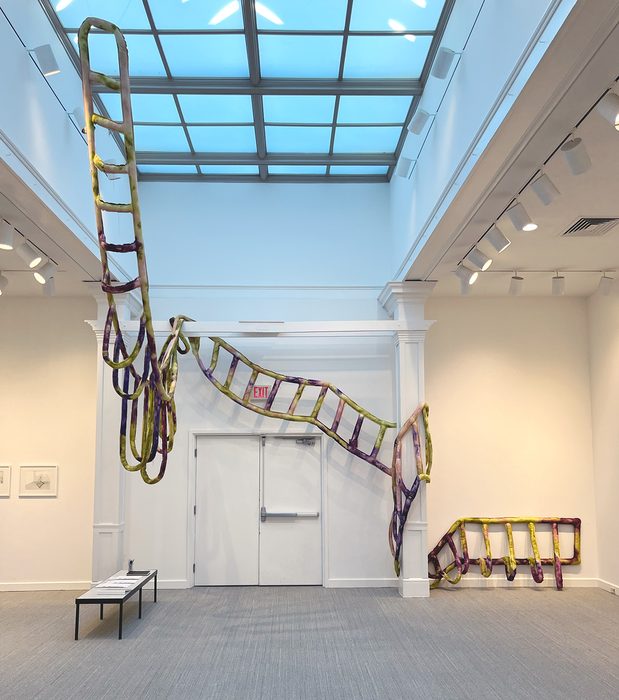
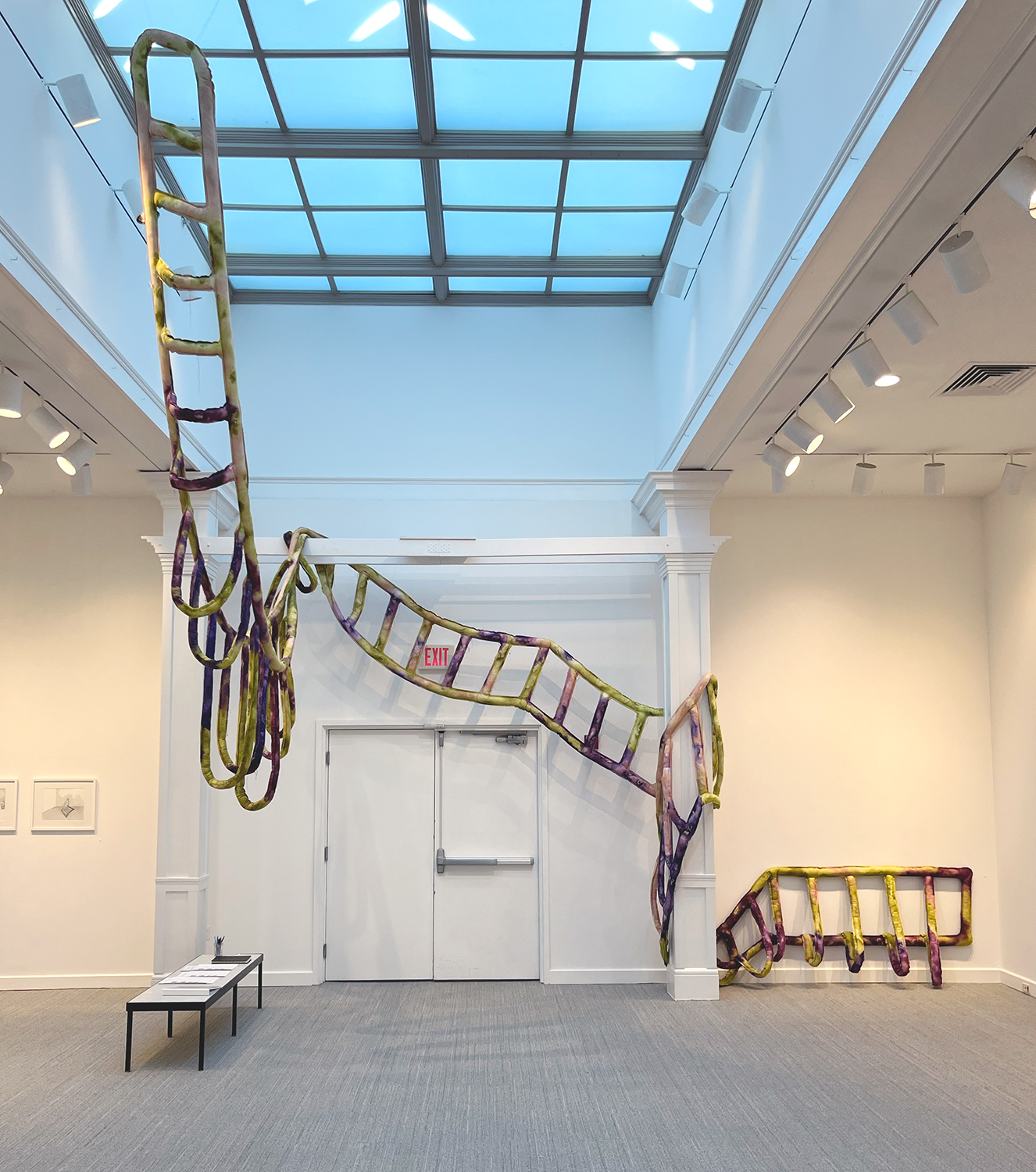
I’m here if you need me, the title piece for this show, has a commanding yet delicate presence, climbing and reaching up towards the ceiling while simultaneously succumbing to its own weight as it droops and warps midair. This duality is a core theme in Kate Holcomb Hale’s work, which explores the challenging, all-encompassing, and often unseen labors associated with caregiving. Like the ladder Holcomb Hale depicts here, our society’s traditional care systems are firm and predictable, offering a strict one-size-fits-all approach that so frequently fails to meet individual needs. But unlike the rigid true-to-life structures, Holcomb Hale’s sewn sculpture falters and folds, a representation of the fallible and unpredictable nature of bodies and personal caregiving, or perhaps a testament to the flexibility and resilience required of those in such roles.
Hand-painted with great care and attention to detail, I’m here if you need me’s green and purple color palette is intentionally evocative of bruising, a reminder of injury and bodily stress, but also of healing. Holcomb Hale describes painting as an act of remembering, noting the skin-like quality of fabric and the tender nature of working and transporting such soft, bodily forms. The artist began creating sewn works like this one after experiencing the loss of her mother and father, for whom she had acted as primary caregiver. Although a new medium to her, Holcomb Hale grew up surrounded by her mother’s sewing and upholstery projects. She views these sculptures as a way of continuing her relationship with her mother, whose voice and process are ever-present.
Holcomb Hale designs her soft sculptures to be site-responsive, spending a great deal of time becoming acquainted with the Trustman Art Gallery and how visitors move through the space before creating them. I’m here if you need me interacts with surrounding architectural elements in a playful manner—it hugs the right pillar and coils around the archway, and ladder rungs frame the exit sign, highlighting a feature one would normally try to diminish. Holcomb Hale invites visitors to move around the room while viewing her sculptures, using them as a means to become more present and mindful of the surrounding space.