
March 12, 2026
Written by Gallery & Curatorial Fellow Eva Llopiz
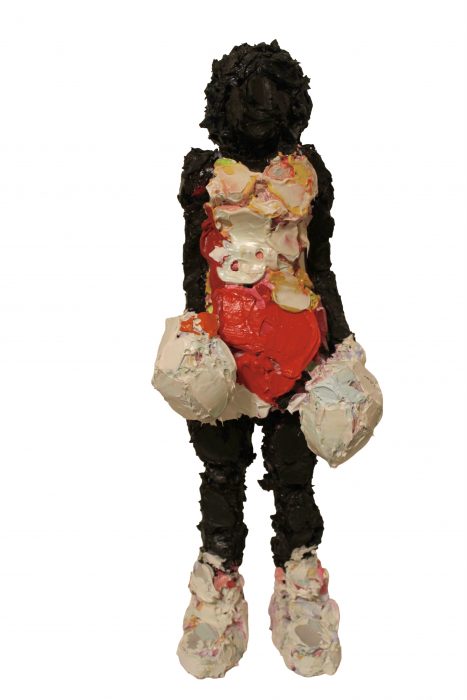
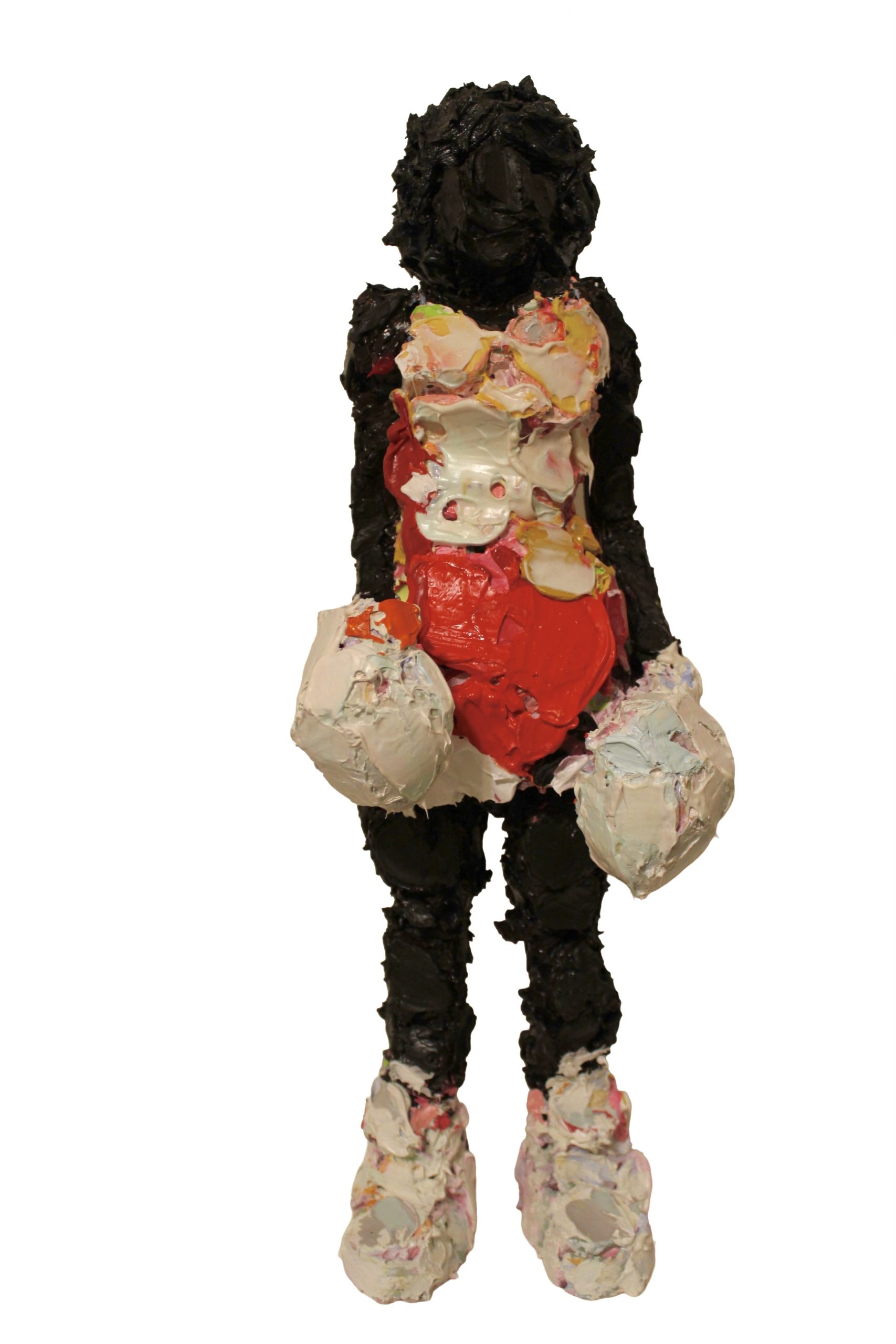
Lavaughan Jenkins is a painter based in Los Angeles, but more recently has come to Boston. He notes that he has done many gallery residencies, though has not found a place to stay tied down to. He prefers to show his work at women-operated galleries, as his works reflect his deep appreciation for the women in his life who have supported him, and women who do not nearly get enough credit as they should, specifically Black women. In this series, he uses both 2D and 3D paintings to deliver his message. Compared to his 2D works, Jenkins still considers the 3D rounds to be paintings rather than sculptures. Jenkins creates what he describes as “golems,” taking depictions of Black women fighters and creating his own characters. He uses these as a type of protection and way of defending rights for Black women, as golems are used for in ancient Jewish history. He says that creating these characters feels sort of like Frankenstein. These rounds are created with wire, plaster, foam, and paint. He says that these 3D paintings take about a full year to create and fully harden. Though individually they take a while, he works on multiple pieces at once. He once worked on a life size round for Google that took about 2 years to finish. He names his pieces after the songs he listens to while creating, using music as a way to push himself creatively. A big source of inspiration for him in this series was the album “Eve” by Rapsody, as many of his characters are named after tracks on this album. He finds this album to be gritty and speaks well about Black women’ s rights. The notes in the song are commands and give the golems the words to let them speak. In this piece entitled Cleo, Jenkins uses a track from this album to name his golem. This song is named after the character Cleo, played by Queen Latifah, from the 1996 movie Set it Off. This song talks about the struggles of Black women, especially in the music industry. Rapsody emphasizes the need for Black women to assert themselves, especially in situations where they are told “no”. The character Cleo is meant to represent standing up for oneself and not accepting defeat under a racist and misogynistic lens.